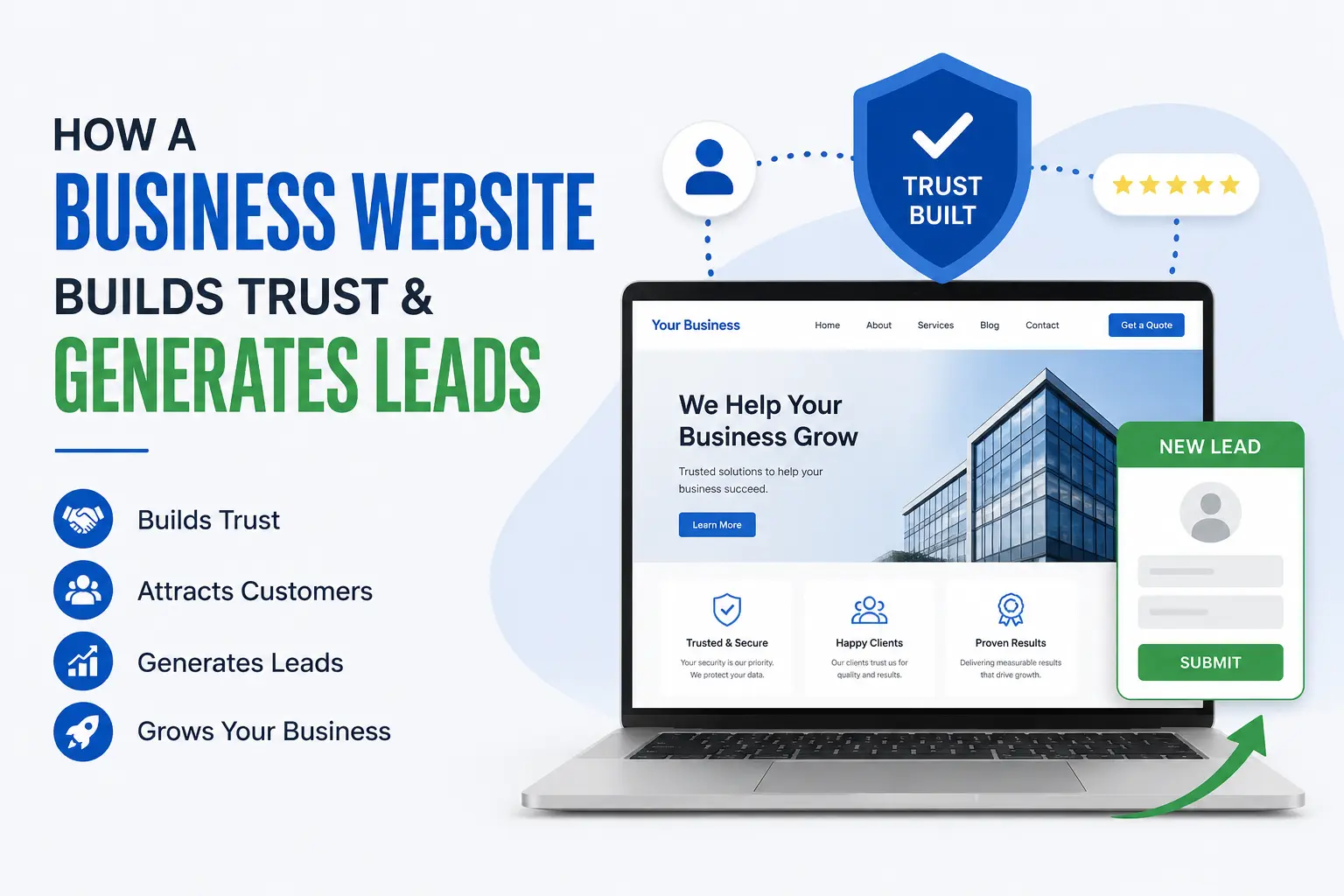
In today’s digital world, your website is often the first impression customers have of your business. Before contacting you, people usually search online, visit your website, and evaluate whether your company looks trustworthy. A professional business website does much more than display information. It builds credibility, answers customer questions, and encourages visitors to take action. Whether you run a startup, a local business, or an established company, your website plays a vital role in generating quality leads. In this guide, you’ll learn how a business website builds trust and generates leads while helping your brand grow online.
Why Every Business Needs a Professional Website
Consumers expect every legitimate business to have a website. If they cannot find one, they may question your credibility.
A professional website helps you:
- Build brand credibility
- Showcase products and services
- Reach customers 24/7
- Increase online visibility
- Generate qualified leads
- Improve customer communication
- Support digital marketing campaigns
Your website works as your digital storefront, even when your office is closed.
How a Business Website Builds Trust
Trust is one of the biggest factors that influence buying decisions. A well-designed website helps visitors feel confident about your business.
1. Professional Website Design Creates a Strong First Impression
Visitors form opinions within seconds.
A clean, modern design immediately shows that your business is reliable and professional.
Good website design includes:
- Simple navigation
- Professional branding
- High-quality images
- Consistent colors and fonts
- Mobile-friendly layouts
- Fast loading pages
An outdated or cluttered website can drive visitors away before they explore your services.
2. Clear Business Information Builds Credibility
Customers want to know who they are doing business with.
Your website should clearly display:
- Company background
- Contact details
- Office address
- Business hours
- Team information
- Service areas
Transparent information makes your company appear more trustworthy.
3. Customer Reviews and Testimonials Increase Confidence
Social proof is one of the strongest trust signals.
Displaying genuine customer testimonials helps new visitors feel confident in choosing your business.
You can also include:
- Google Reviews
- Client success stories
- Video testimonials
- Case studies
- Ratings
Positive customer experiences encourage new leads to contact you.
4. Secure Websites Build Customer Confidence
Website security is essential.
Visitors expect websites to protect their personal information.
Important security features include:
- SSL certificate (HTTPS)
- Secure contact forms
- Privacy policy
- Cookie policy
- Secure payment gateways
A secure website shows customers that their information is safe.
5. High-Quality Content Demonstrates Expertise
Helpful content positions your business as an expert.
Instead of focusing only on selling, answer common customer questions through:
- Blog articles
- FAQs
- Service guides
- Industry insights
- Educational resources
Useful content builds authority and encourages visitors to trust your knowledge.
How a Business Website Generates Leads
Trust alone is not enough. Your website should also convert visitors into potential customers.
Here are the key strategies.
1. Strong Calls-to-Action Encourage Visitors to Take the Next Step
Every page should guide visitors toward an action.
Examples include:
- Request a Quote
- Book a Consultation
- Contact Us
- Download a Guide
- Schedule a Demo
Clear CTAs improve website conversion rates.
2. Contact Forms Make Lead Generation Easy
Visitors should never struggle to contact your business.
A simple contact form should ask only for essential information, such as:
- Name
- Phone number
- Service required
- Message
Short forms usually generate more inquiries than long forms.
3. SEO Brings Qualified Traffic
Even the best website cannot generate leads if nobody finds it.
Search Engine Optimization (SEO) helps your website appear in Google search results.
Important SEO practices include:
- Keyword optimization
- Quality content
- Fast website speed
- Mobile responsiveness
- Internal linking
- Image optimization
- Local SEO
SEO attracts visitors who are actively searching for your services.
4. Mobile-Friendly Websites Increase Conversions
Most users browse on smartphones.
If your website does not work properly on mobile devices, potential customers may leave.
A responsive website offers:
- Easy navigation
- Fast loading
- Clickable buttons
- Readable text
- Better user experience
Google also rewards mobile-friendly websites with better rankings.
5. Fast Website Speed Reduces Bounce Rates
Speed affects both user experience and SEO.
Visitors expect pages to load within a few seconds.
A faster website can:
- Improve engagement
- Increase conversions
- Reduce bounce rates
- Improve search rankings
Optimize images, use reliable hosting, and minimize unnecessary scripts for better performance.
6. Landing Pages Improve Lead Generation
Dedicated landing pages focus on one specific service or offer.
Unlike a general homepage, landing pages remove distractions and guide visitors toward a single goal.
Effective landing pages include:
- Clear headlines
- Customer benefits
- Trust signals
- Testimonials
- Contact forms
- Strong CTAs
They are highly effective for paid advertising and marketing campaigns.
Essential Features Every Business Website Should Include
To build trust and generate leads, your website should contain:
- Professional homepage
- About Us page
- Service pages
- Contact page
- Customer testimonials
- Portfolio or gallery
- Blog section
- Frequently Asked Questions
- SSL security
- Fast loading speed
- Mobile-friendly design
- Clear calls-to-action
These features improve both user experience and business credibility.
Common Website Mistakes That Reduce Trust
Avoid these common problems:
- Outdated website design
- Broken links
- Slow loading pages
- Missing contact information
- Poor mobile experience
- Low-quality content
- No customer reviews
- Weak calls-to-action
- Complicated navigation
- Lack of security certificates
Fixing these issues can significantly improve your conversion rate.
Benefits of a Trustworthy Business Website
A professional website provides long-term business value.
It helps you:
- Build customer confidence
- Improve brand reputation
- Generate consistent leads
- Increase online visibility
- Improve Google rankings
- Support digital marketing
- Increase sales opportunities
- Grow your customer base
A business website is one of the most valuable marketing assets your company can own.
Conclusion
A professional business website is much more than an online brochure. It is a powerful tool that builds trust, strengthens your brand, and generates high-quality leads.
By combining professional design, valuable content, strong SEO, website security, and clear calls-to-action, you can turn visitors into loyal customers.
Investing in your business website today creates long-term opportunities for growth, credibility, and increased revenue. When your website is built with both users and search engines in mind, it becomes a reliable source of leads and a foundation for sustainable business success.
Frequently Asked Questions
How does a business website build trust?
A business website builds trust by showcasing professional design, clear contact information, customer reviews, secure browsing (HTTPS), and valuable content that demonstrates expertise.
Can a website generate leads without paid advertising?
Yes. A website optimized for SEO, user experience, and conversions can attract organic traffic and generate qualified leads without relying solely on paid ads.
Why is SEO important for lead generation?
SEO helps your website rank higher in search engines, making it easier for potential customers to find your business when searching for relevant products or services.
What features help a website generate more leads?
Key lead-generation features include clear calls-to-action, contact forms, landing pages, testimonials, live chat, fast loading speed, and mobile-friendly design.
Is a mobile-friendly website necessary?
Absolutely. Most users browse on mobile devices, and Google prioritizes mobile-friendly websites in search rankings. A responsive design also improves user experience and conversions.